 Sadharo
Choosing a board
How to choose a sadhu board: nail spacing chart and materials
This sadhu board spacing guide starts with the one thing that really matters: nail spacing. Shops offer copper and zinc nails, spacing from 6 to 15 mm, and diamond, square or “flower of life” layouts, but the metal and the layout mostly affect care, looks and price. Here's how to choose a sadhu board, step by step.
- The Sadharo team
- Updated September 27, 2026
- 9 min read
In short
- Beginners: 8 or 10 mm. 10 mm is the all-round choice for most people; 8 mm is the gentlest start.
- 12 mm: once you stand calmly on your board for 15 minutes or more.
- 15 mm: for years of daily practice.
- Nail metal affects care and looks, not the benefits of practice.
Sadhu board spacing chart
Nail spacing (also called pitch) is the distance between nails on a sadhu board, measured from one nail to its neighbor. The smaller it is, the more nails under your foot, the less load on each one, and the softer it feels. Here's what that means for a size EU 40 foot (about US men's 7 or women's 8.5) at 70 kg (154 lb):
| Nail spacing | Nails under one foot | Load per nail | Feels | Best for |
|---|---|---|---|---|
| 6 mm | about 480 | about 70 g (2.5 oz) | very gentle | very sensitive feet |
| 8 mm | about 270 | about 130 g (4.5 oz) | soft | the gentlest start |
| 10 mm | about 170 | about 200 g (7 oz) | classic | most beginners |
| 12 mm | about 120 | about 290 g (10 oz) | firm | 15+ calm minutes on 10 mm |
| 15 mm | about 80 | about 450 g (1 lb) | deep | years of daily practice |
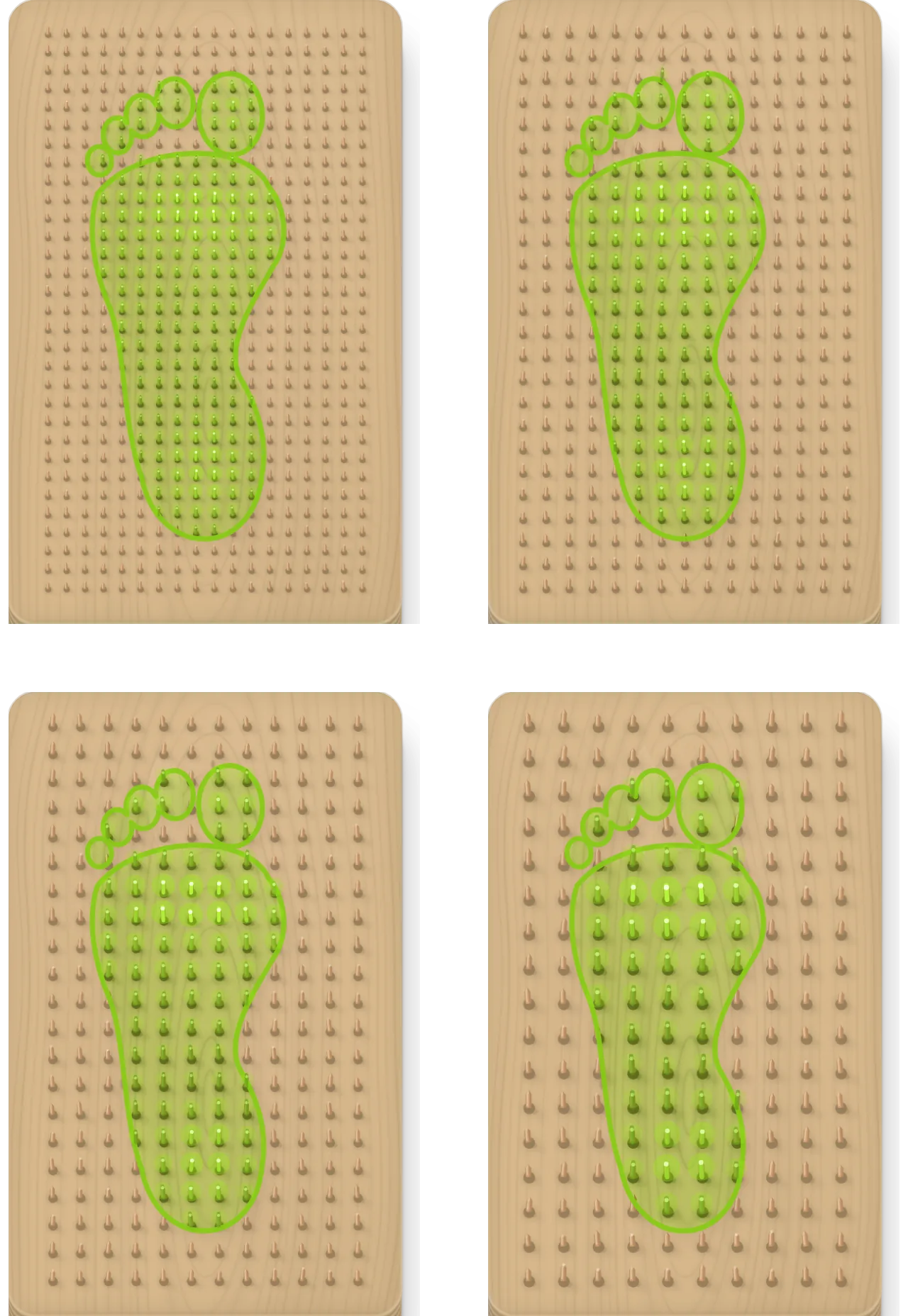
Work out the numbers for your own weight and shoe size with the nail load calculator.
Weight matters too. At 100 kg (220 lb) on a 10 mm board, each nail carries about 290 g (10 oz), the same as a 70 kg person on 12 mm. So if you're heavier, start on 8 mm.
Which sadhu board is best for beginners? 8 or 10 mm
- 10 mm is the all-round choice for most beginners. You'll feel it clearly, but it's manageable, and you won't outgrow the board quickly.
- 8 mm if your feet are sensitive, you weigh around 100 kg (220 lb) or more, or you want the gentlest possible start.
Going straight for 12 or 15 mm is a common beginner mistake. Sharper spacing doesn't speed up progress: it turns practice into a fight, and the board often ends up in a closet. How to start on a new board is in how to use a sadhu board.
When to move up to 12 or 15 mm
Board makers set the bar for 12 mm at 15 calm minutes on your current board. Sadharo turns that into a simple rule: once you've stood calmly for 15 minutes or more, three times, you can try sharper spacing, from 8 to 10 mm or from 10 to 12 mm. Start the new board with a few minutes: your time on it will be shorter, and that's fine. How goals change with spacing is in how long to stand on a sadhu board.
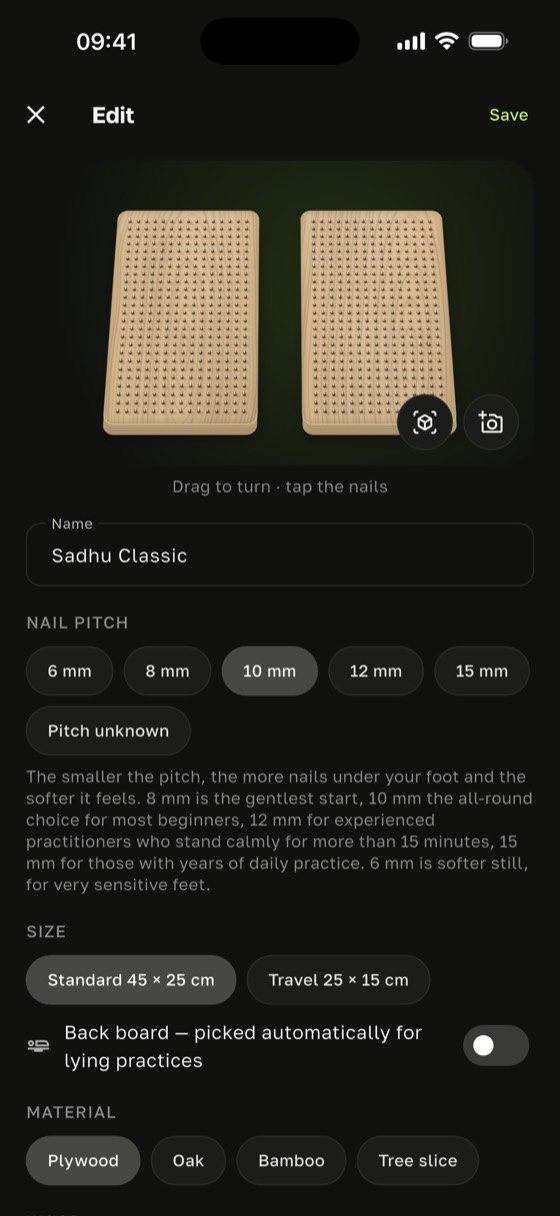
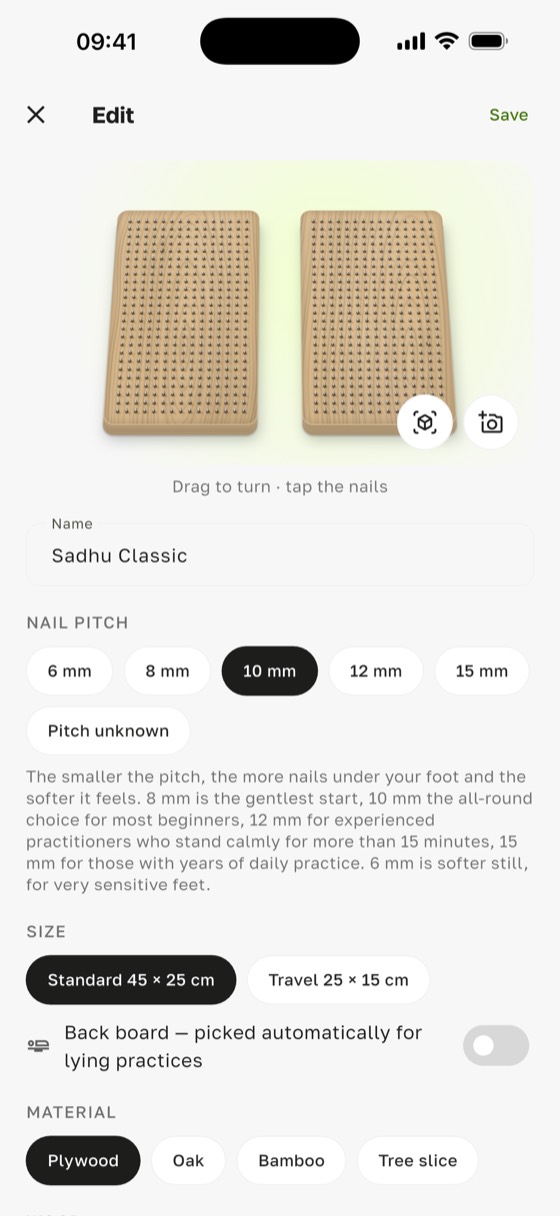
15 mm isn't everyone's goal. It's for people with years of daily practice.
Copper, zinc or silver nails: which is best?
Sellers often credit copper nails with special powers, such as “healing” copper. There's no research to back that up. How a board feels comes down to spacing and nail quality; the metal mostly affects care and looks.
| Nails | What to know |
|---|---|
| Zinc-plated (galvanized) | Don't rust as long as the board stays dry. Long spells of damp can cause corrosion over time. |
| Copper-plated | A copper layer over steel. May darken over time, which doesn't affect practice. |
| Solid copper | May develop a green patina over time, which is normal for copper. Don't leave moisture on the nails. |
| Copper and zinc | Alternating rows. Patina on the copper is normal; the zinc-plated nails dislike damp, so keep the board dry. |
| Silver-plated | A silver layer over steel that doesn't rust; the silver may tarnish. Wipe with a soft dry cloth. |
| Bamboo spikes | A natural material. Don't soak them, and dry the board in the open, away from radiators. |
| Ball tips | No point at all, the gentlest contact. Dust and moisture collect under the balls: wipe them and let the board air-dry. |
| Bullet tips | Rounded: softer than a point, firmer than a ball. Easy to wipe; keep the board dry. |
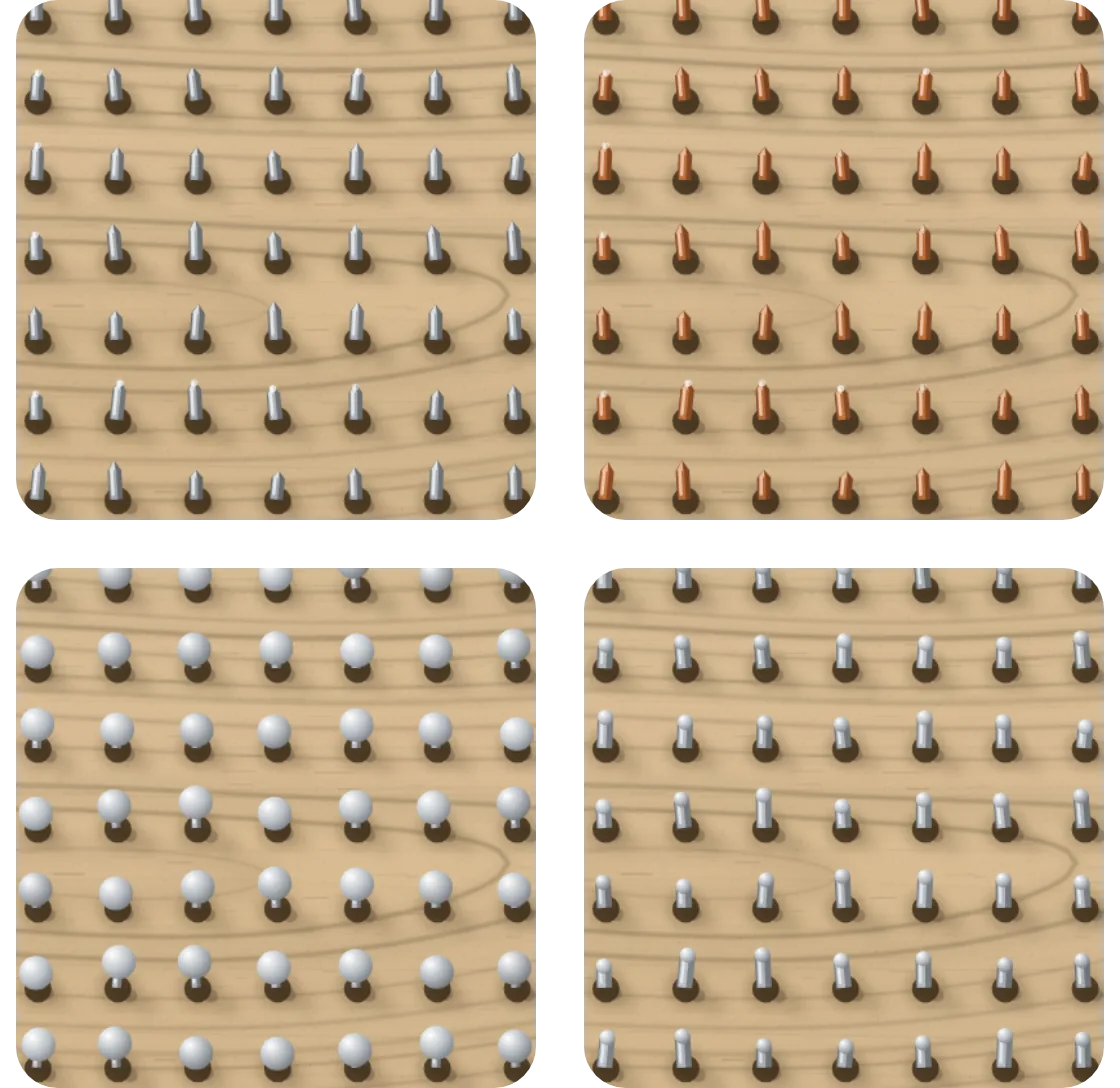
If you want the classic practice on nails, choose metal. Wooden and bamboo spikes feel different and need wood-style care.
Nail layouts: diamond, square, checkerboard
- Diamond is the most popular layout with buyers. Some boards have a single nail in the middle of each diamond, which makes them comfortable even for beginners.
- Square is a grid of straight horizontal and vertical rows.
- Checkerboard alternates rows. At 10 mm it has about 13% fewer nails, so it feels stronger. It's for people who've mastered the classic layouts.
- Hexagon forms the points into hexagons for dense, even pressure.
- Flower of life is a pattern of overlapping circles after the sacred symbol. Board makers count it as a hexagon, and both are usually chosen by experienced practitioners.
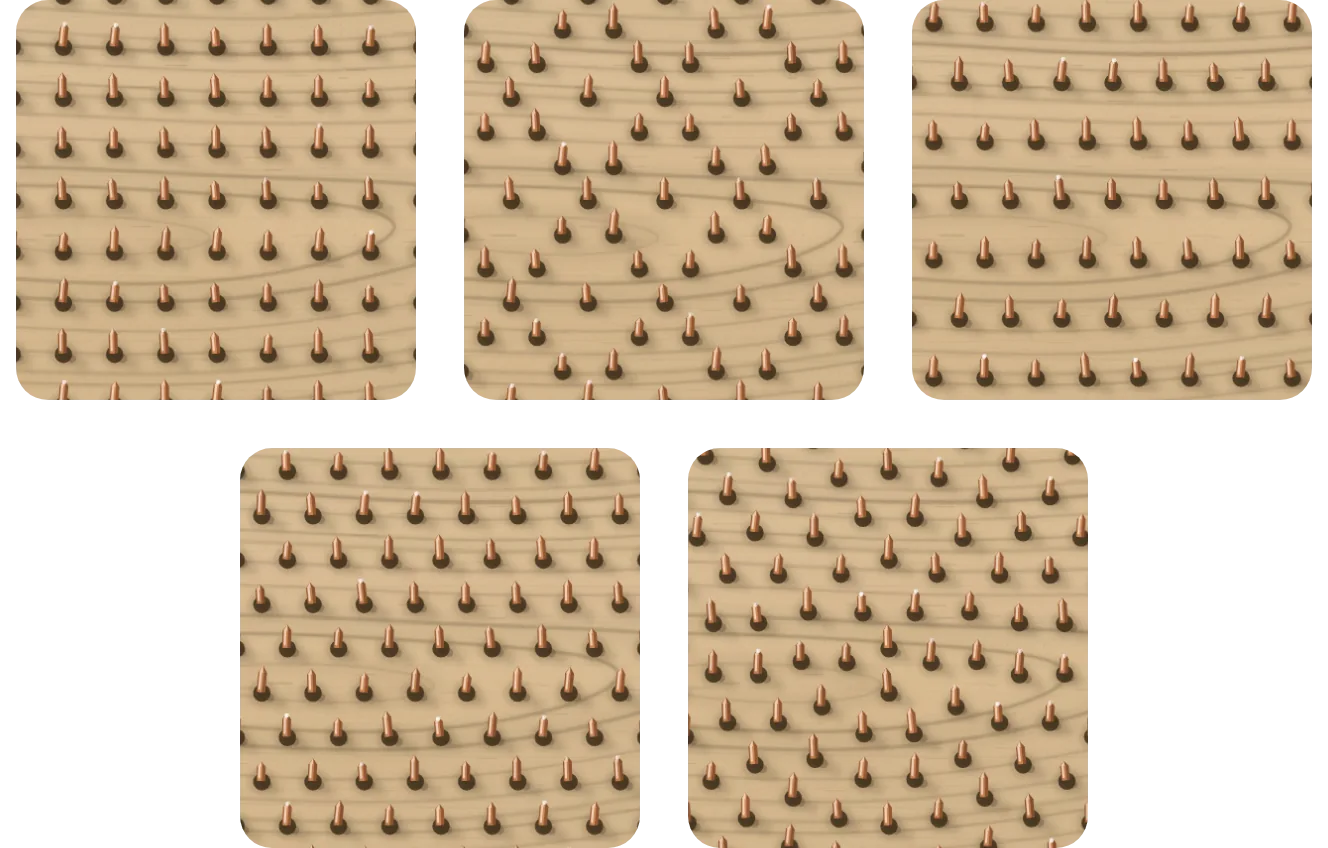
A simple layout is all a beginner needs. Move to complex ones gradually, as your feet allow.
What size sadhu board do you need?
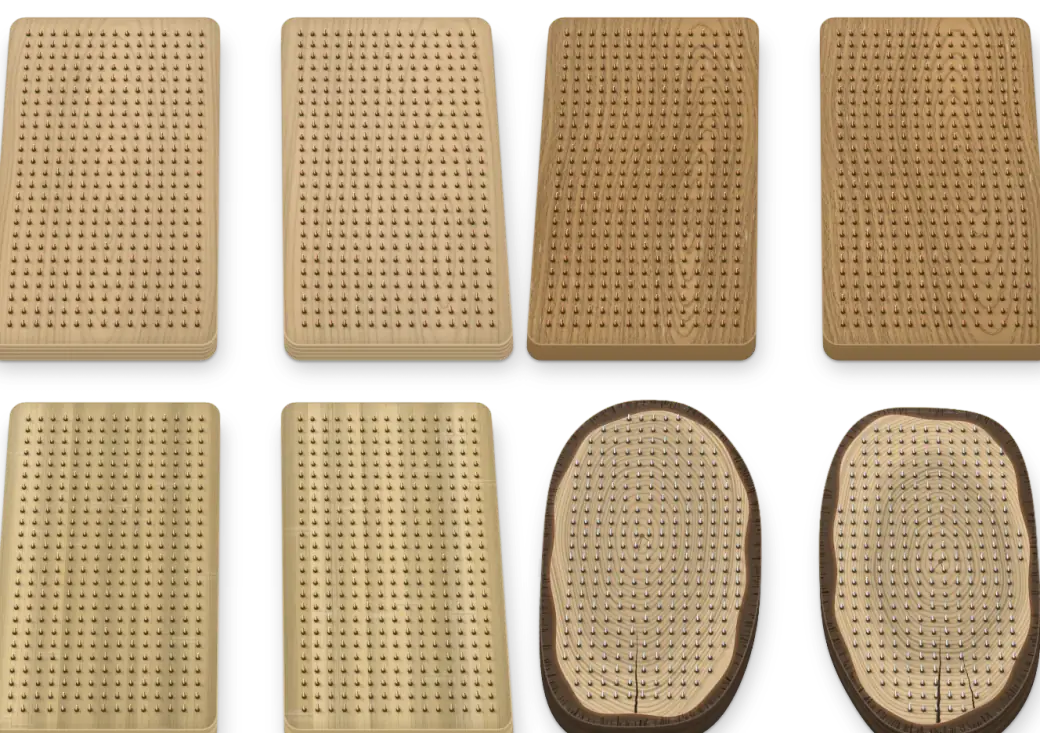
Sadhu board dimensions vary from maker to maker, and boards usually come as a pair, one per foot. That makes stepping on and off easier and lets you set them hip-width apart. Each board should fit your whole foot, with no heel or toes hanging over the edge.
Bases are made of plywood, oak, bamboo or a tree slice. The material hardly affects practice: what matters is that the board sits flat and doesn't rock.
What to check before you buy
- All nails are the same height, with no rust or burrs.
- The base is flat and doesn't wobble on the floor.
- The nail spacing is clearly stated: 8, 10, 12 mm and so on.
- It comes with a case: a nail board shouldn't be left where someone could step on it by accident.
How to clean and care for a sadhu board
How to clean a sadhu board comes down to keeping it dry and wiping the nails now and then:
- Store it in its case, at least a meter (about 3 ft) from radiators and heaters and out of direct sun.
- If condensation forms, for example after practice in the cold, let the board dry in the open before you pack it away.
- Brush dust from between the nails and wipe the base with a slightly damp cloth. No abrasive or all-purpose cleaners.
- Wipe the nails with an alcohol-free antiseptic such as chlorhexidine: once a month for your own board, after every class for a shared studio board. Don't soak the board.
Questions about choosing a board
Can you make a DIY sadhu board?
You can, but the hard part is making every nail the same height, burr-free and firmly fixed. A nail sitting higher than its neighbors takes more of your weight. Printable templates, materials and the steps are in DIY sadhu board. Don't use a homemade board for lying on your back: what to lie on instead is in sadhu board for back.
Can I use an acupressure mat instead of a sadhu board?
To get started, yes: an acupressure mat is softer and a fine first step. But metal nails feel much stronger, and it's a different practice. How the two compare is in sadhu board vs acupressure mat.
How long does a sadhu board last?
Years, if you keep it dry and in its case. Replace it when nails start to rust, work loose or sit at different heights: an uneven board is less comfortable and riskier for your skin.
Do I need two boards or one?
A pair is easier: one board per foot, so you can step on one foot at a time and set them hip-width apart. One large board works too, as long as both feet fit fully.
Should I buy boards with different spacing at once?
No. Start with one pair of 8 or 10 mm. Buy the next when you stand calmly on the first for 15 minutes or more.
This article isn't medical advice. Sadharo isn't a medical device. Effects are described from practitioners' experience and published research, not as a promise of results.