 Sadharo
Safety
Is a sadhu board dangerous? Side effects and who should skip it
Sadhu board side effects are rare when you practice sensibly, but they're real, and some people shouldn't stand on nails at all. Below: what can go wrong and why, who should skip the practice according to board makers, and what to do if you have diabetes, high blood pressure or varicose veins, or are pregnant.
- The Sadharo team
- Updated October 13, 2026
- 8 min read
In short
- Main side effects: dizziness and fainting, falls, small wounds, and pain from pushing too hard.
- Board makers say skip it: pregnancy or breastfeeding, a recent stroke or heart attack, heart problems, blood pressure medication, wounds on your feet, and a few more.
- Ask a doctor first: varicose veins, diabetes, epilepsy, blood thinners, an acute illness or fever.
- Step off at once: if you feel very dizzy, sick, weak or numb, or get a sharp unusual pain.
These lists come from board makers plus a few extra cautions. They aren't a clinical protocol and don't replace medical advice. If any of it applies to you, talk to a doctor before you start.
Is standing on nails safe?
For most healthy adults without contraindications, yes, as long as you start gently. On a good board your weight spreads over hundreds of nails, so they press into the skin without piercing it. At 70 kg (154 lb) on 10 mm spacing, each nail under your foot carries about 200 g (7 oz).
The risks come less from the nails than from how you use the board: jumping on, tensing up until your breath stops, standing too long and ignoring your body's signals.
Sadhu board side effects
Most sadhu board side effects come from how you practice, not from the nails themselves:
- Dizziness and fainting. Standing still, a breath frozen by tension and a sharp reaction to pain can make you lightheaded. A fall onto the nails or furniture is the real danger.
- Small wounds. Rare on a quality board with a slow step. More likely if you jump on, or if the nails are uneven, rusty or burred.
- Unnoticed skin damage. With diabetes or neuropathy you may not feel a small wound in time, and it can heal slowly.
- Pushing through pain. Sharp pain, numbness or nausea are signs to step off, not a “detox”.
Red dots and dents on your soles afterwards are normal and usually fade within a few hours. What the practice does for your feet, and what's known about plantar fasciitis, flat feet and swelling, is in sadhu board for feet.
Why standing on nails can be bad for some people
Standing on nails is bad for some people for three simple reasons:
- A strong pain response. The first seconds on the nails are an intense stimulus that can leave some people lightheaded. For most healthy people that's no problem, but it's an extra load on a heart or blood vessels that already struggle.
- Fainting and falls. Standing still, a breath frozen by tension and blood pressure medication all raise the chance of dizziness.
- Wounds you don't notice. Reduced feeling in the feet means a small cut can go unnoticed and get infected.
Who should not use a sadhu board
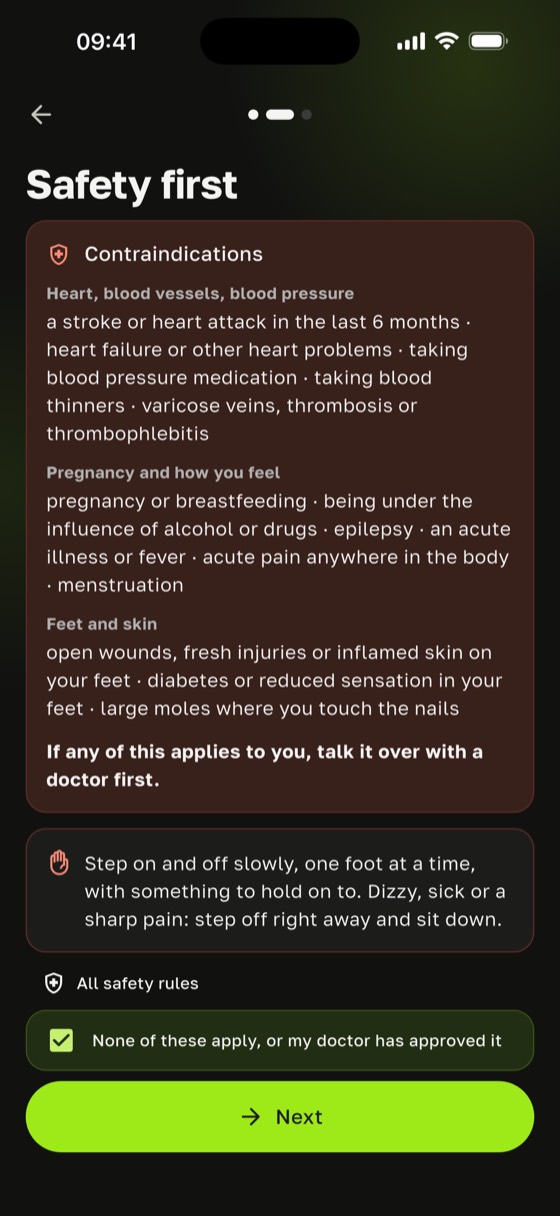
Board makers list these contraindications:
- pregnancy or breastfeeding;
- your period;
- a stroke or heart attack in the last 6 months;
- heart failure or other heart problems;
- taking blood pressure medication;
- acute pain anywhere in the body;
- open wounds, fresh injuries or inflamed skin on your feet;
- being under the influence of alcohol or drugs.
Not on the makers' list, but worth checking with a doctor first:
- varicose veins, thrombosis or thrombophlebitis;
- diabetes or reduced sensation in your feet;
- epilepsy;
- taking blood thinners;
- an acute illness or fever;
- large moles where your feet touch the nails.
Sadhu board while pregnant or breastfeeding
Don't. Board makers list pregnancy and breastfeeding as contraindications. A strong pain response, dizziness and the risk of a fall aren't worth it during this time. When you want to return to practice afterwards, check with your doctor first.
Standing on nails during your period
Board makers advise skipping those days. There's no research on this either way, so go with their advice and how you feel. Skipped days don't reset your progress.
Sadhu board with high blood pressure or heart problems
A stroke or heart attack in the last 6 months, heart failure and other heart problems are on the makers' list. So is blood pressure medication: combined with the pain response, it raises the risk of fainting. If you have high blood pressure that isn't being treated, check with your doctor first.
Sadhu board with diabetes
Diabetes often reduces sensation in the feet and slows healing, so you might not notice a small wound. Practice only with your doctor's okay, and check your feet after every session.
Varicose veins and blood thinners
Varicose veins, thrombosis and thrombophlebitis aren't on the makers' list, but standing still with pressure on your feet is something to agree with a doctor first. With blood thinners, any small wound bleeds longer. If your doctor says yes, keep sessions short and start seated.
Is there a weight limit for a sadhu board?
There's no strict limit, but the heavier you are, the more each nail carries. At 100 kg (220 lb) on 10 mm spacing, each nail takes about 290 g (10 oz), the same as a 70 kg (154 lb) person on 12 mm. So choose a softer 8 mm board and start seated. More in the sadhu board spacing guide.
When to step off immediately
Even without contraindications, stop if you:
- feel very dizzy or your vision darkens;
- feel sick;
- get an unusual sharp pain or numbness;
- feel weak, as if you might faint;
- suddenly feel much worse.
Step off right away but slowly, holding on, and sit down. Don't push through dizziness or nausea: it's a signal to stop, not a “cleansing”. Which sensations are normal is covered in does standing on nails hurt.
If your doctor says yes: practice safely
- Start seated. Spend your first sessions on a chair with your feet on the board, a minute at a time.
- Keep support nearby. A wall, chair or helper. Step on and off one foot at a time, never jump.
- Breathe. Exhale longer than you inhale, and don't let tension freeze your breath.
- Not on a full stomach. Wait a couple of hours after eating.
- Check your feet. Red dots are normal and fade in a few hours. A wound or inflammation means take a break.
A step-by-step first practice is in how to use a sadhu board.
Questions about sadhu board safety
Is standing on nails good or bad for you?
For most healthy adults it's a safe way to practice calm and focus, as long as you start gently. It becomes risky when you ignore contraindications or push through warning signs. The honest take on what it does is in sadhu board benefits.
Can standing on nails make you sick?
It can make you feel lightheaded or queasy, usually from tensing up and forgetting to breathe, standing too long or practicing on a full stomach. Step off slowly, sit down and breathe. If it keeps happening, stop and talk to a doctor.
Can children use a sadhu board?
The Sadharo app is for people aged 16 and over; for anyone younger, talk it over with a pediatrician. Either way, keep the board in its case: stepping on it by accident is far riskier than stepping on it on purpose.
Can the nails pierce my skin?
Not on a quality board used properly: your weight spreads over hundreds of nails. Uneven, rusty or burred nails and jumping onto the board are what raise that risk. If you built the board yourself, check it nail by nail as described in DIY sadhu board.
This article isn't medical advice. Sadharo isn't a medical device. Effects are described from practitioners' experience and published research, not as a promise of results.