 Sadharo
For beginners
How to stand on a sadhu board safely the first time
How to use a sadhu board as a beginner comes down to one rule: go slower than you think you need to. The board only looks scary until your first practice. Done right, your first minute is calm: no jumping, no heroics and no pain to grit your teeth through. This guide covers how to set up, how to step on, how to stand on nails and how to step off.
- The Sadharo team
- Updated September 27, 2026
- 8 min read
In short
- Start seated: your first two days are on a chair, feet on the board, one minute.
- Step on slowly: one foot at a time, holding on to something. Never jump.
- Stand soft: knees unlocked, weight even, exhale longer than you inhale.
- Go gentle: an 8 or 10 mm board, and one minute to start.
Sadhu board for beginners: where to start
Every sadhu board beginner should start with a check, not the board: do any contraindications apply to you? If you're pregnant, have heart problems, take blood pressure medication or have wounds on your feet, talk to a doctor first. The full list is in sadhu board side effects.
Then keep it simple: seated for the first two days, short practices for the first week. As a beginner, your goal isn't to stand as long as possible. It's to breathe calmly on the nails. The time comes on its own.
How to set up your sadhu board at home
- A quiet spot where nobody will disturb you for 10–30 minutes. Notifications off.
- The boards hip-width apart, 5–10 cm (2–4 in) from each other, on a level floor or a mat that keeps them from sliding.
- Support such as a wall, chair or sofa back within arm's reach.
- Clean, dry feet with no lotion. Rub them with your hands first to warm them up.
- Not on a full stomach: practice before a meal or a couple of hours after.
- For afterwards: a mat or towel to step onto and a glass of water.
Your first days: start seated on a chair
Sitting is the gentlest way to meet the board. The load on the nails is several times lower, the sensation is the same kind, just softer, and the fear fades faster.
- Sit on a chair with the boards on the floor in front of you.
- Put each foot on its own board. Almost all your weight stays on the chair.
- Slowly lean forward and shift weight onto your feet, only as much as feels okay.
- Breathe slowly: in for 4 counts, out for 6.
- To finish, lean back and lift your feet off.
One seated minute is enough for the first two days. On day three you can stand.
How to step onto a sadhu board
- Stand beside the boards and hold on to a wall or chair back.
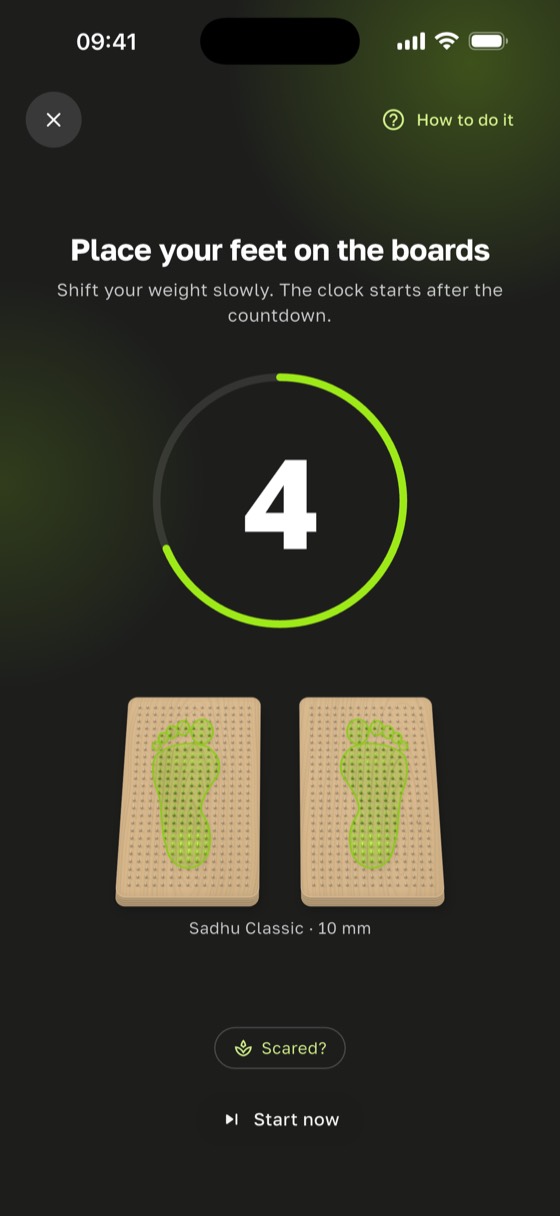
- Place one foot on its board with almost no weight.
- Slowly shift part of your weight onto it.
- Place your second foot on the second board.
- Spread your weight evenly. Let go of the support only once you feel steady.
The one rule: never jump onto the boards. Step on slowly, one foot at a time.
How to stand on nails: technique
Posture
Stand tall with soft, unlocked knees. Relax your shoulders and face, and keep your weight even on both feet.
Breathing
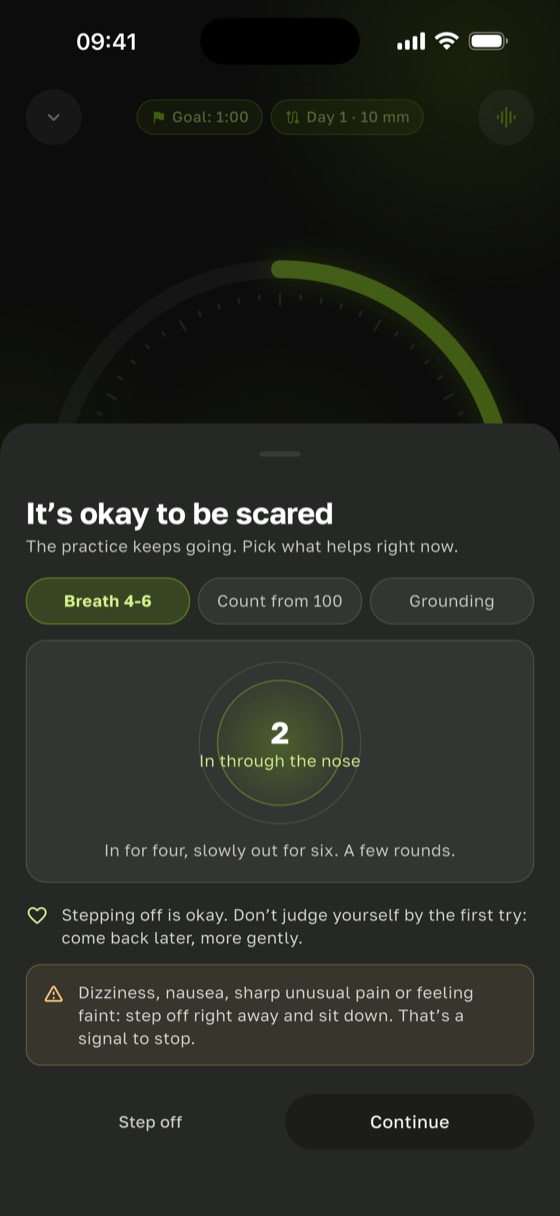
Breathe in through your nose for 4 counts and out for 6. A long exhale helps your body settle. The most common beginner mistake is freezing up and holding your breath without noticing, which only adds tension. A calm pause you count on purpose, as in the 5-5-5 breathing behind Sadharo's “Scared?” button, is a different thing.
Shifting weight
Once you're settled, slowly shift your weight toward your heels, then toward your toes, or sway gently from foot to foot. If it gets too intense, come back to center and take a couple of slow breaths.
Attention
When your attention gets pulled into the sensation, bring it back to the exhale. What the first seconds feel like and how to get through them is covered in does standing on nails hurt.
How to step off
- Hold on to your support.
- Shift your weight onto one leg and slowly lift the other foot onto the mat.
- Then the second one. Don't hop off: step.
- Stand or sit for a minute. Warmth and tingling in your feet are normal.
If you feel very dizzy, sick or a sudden unusual sharp pain, step off right away, just as slowly and holding on, and sit down.
How long should a beginner stand on nails?
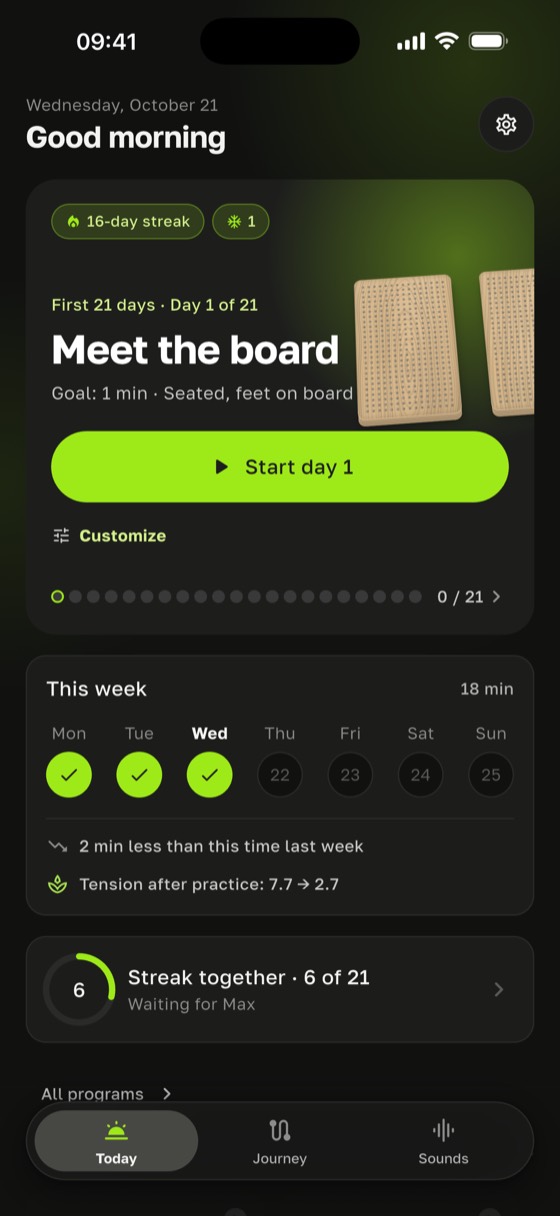
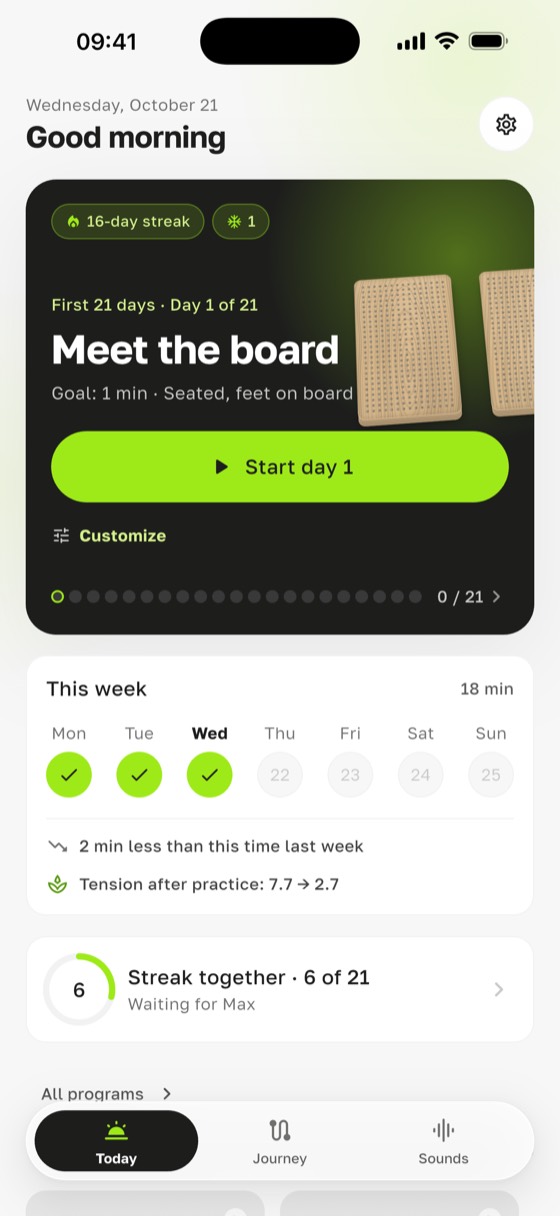
One minute, seated, the first time. From there the time grows gradually: in Sadharo's First 21 Days program it goes from one minute seated to 10 minutes standing by day 21. Add time only once your current time feels calm.
| Day | How | Time |
|---|---|---|
| 1–2 | seated on a chair | 1 minute |
| 3–4 | standing, support nearby | 1.5 minutes |
| 7 | standing | 2.5 minutes |
| 14 | standing | 5 minutes |
| 21 | standing | 10 minutes |
These times are for a 10 mm board. How they change on other boards is in how long to stand on a sadhu board.
Which board to start on
The best sadhu board for beginners has 8 or 10 mm nail spacing. The smaller the spacing, the more nails under your foot and the softer it feels.
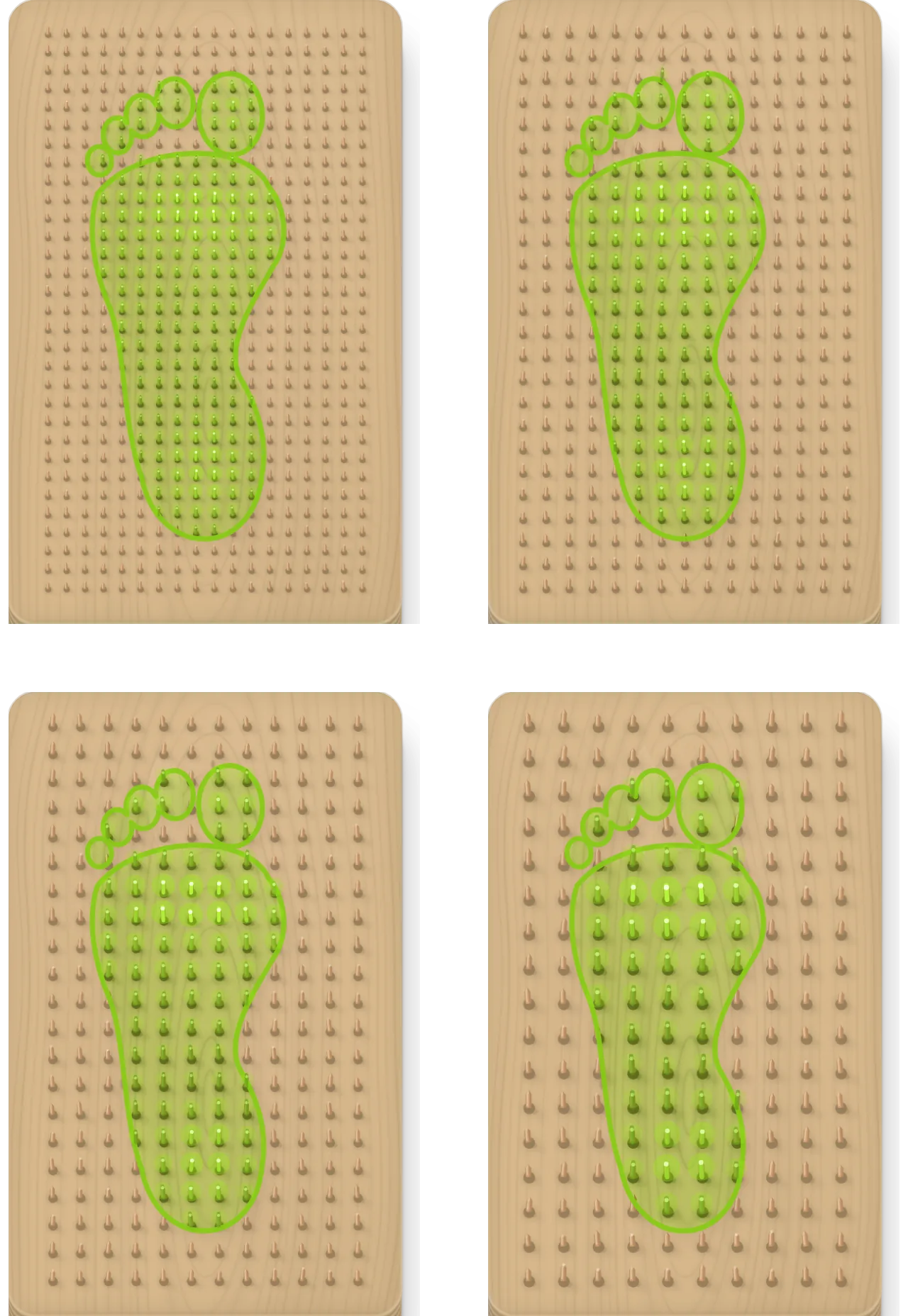
12 mm is for people who already stand calmly for 15 minutes or more, and 15 mm for years of daily practice. Spacing, nail metal and size are compared in the sadhu board spacing guide.
Common beginner mistakes
- Buying 12 or 15 mm straight away. Start with 8 or 10 mm and move up later.
- Jumping on or stepping on fast. A slow entry is the main rule: one foot, shift your weight, then the other.
- Freezing up and holding your breath. Tension stops the breath before you notice. Breathe slowly, exhale longer than you inhale.
- Treating it like a race. Your first practice isn't a competition. Thirty mindful seconds is a good start.
- Blaming the board. On a decent board, a nail a millimeter higher almost never stops you standing. Fear usually does.
- Expecting instant results. Change comes with regular practice, not one long stand.
Beginner questions
Can anyone stand on nails?
Most healthy adults can, as long as they start gently. It isn't for everyone, though: pregnancy, heart problems, blood pressure medication and wounds on your feet are among the reasons to skip it or check with a doctor first. The full list is in sadhu board side effects.
Can you stand on a sadhu board with socks?
Yes, and it's a fine way to start: thin socks soften the sensation. Once you feel calm, move to bare feet, which is how most people practice.
What if I'm scared to step onto the board?
Start seated and take your time: the fear fades once your body learns the nails don't cut. Sadharo's timer has a “Scared?” button with 5-5-5 breathing (in through the nose for 5, a calm hold for 5, out through the mouth for 5), a countdown from 100, a grounding exercise and clear signs it's time to step off.
Do I need an instructor to start?
No. Support within reach and a slow pace are enough. For the first few times, it helps to have someone nearby who can give you a hand.
Is it better to stand on nails in the morning or evening?
Whenever you won't be rushed. In the morning it wakes you up; in the evening it helps you switch off after work. Just not straight after a meal.
This article isn't medical advice. Sadharo isn't a medical device. Effects are described from practitioners' experience and published research, not as a promise of results.