 Sadharo
Practice time
How long should you stand on nails, and how often?
How long to stand on a sadhu board? Less than you'd think: one minute is plenty the first time. After that, how long you stand on nails depends on your experience, your board's nail spacing and how you feel that day. Below: a week-by-week chart and simple rules for adding time.
- The Sadharo team
- Updated October 13, 2026
- 6 min read
In short
- First time: 1 minute seated on a chair, or 30–60 seconds standing with support.
- First three weeks: time grows from 1 to 10 minutes.
- Experienced practitioners: 10–20 minutes. Longer isn't better.
- How often: once a day. A little every day beats long sessions now and then.
How long to stand on nails the first time
One minute, sitting on a chair with your feet on the board. Or 30–60 seconds standing, with something to hold on to. That's enough to meet the sensation without being scared off by it.
Your first practice isn't a competition. If you want to step off after 30 seconds, step off: a calm half-minute does more than three forced minutes. How to prepare and step on safely is in how to use a sadhu board.
How long to stand on a sadhu board: week-by-week chart
These guidelines come from Sadharo's programs and assume a board with 10 mm nail spacing. Time only goes up once the current time feels calm.
| Stage | How | Time on the board |
|---|---|---|
| Days 1–2 | seated on a chair | 1 minute |
| Days 3–7 | standing, support nearby | 1.5–2.5 minutes |
| Days 8–14 | standing | 3–5 minutes |
| Days 15–21 | standing | 5–10 minutes |
| 40 days, intermediate | the classic cycle | 5–15 minutes |
| 80 days, experienced | long practice | 10–20 minutes |
Even the program for experienced practitioners stops at 20 minutes. Past that point, depth matters more than the number on the timer: stillness, breath, attention.


How nail spacing changes the time
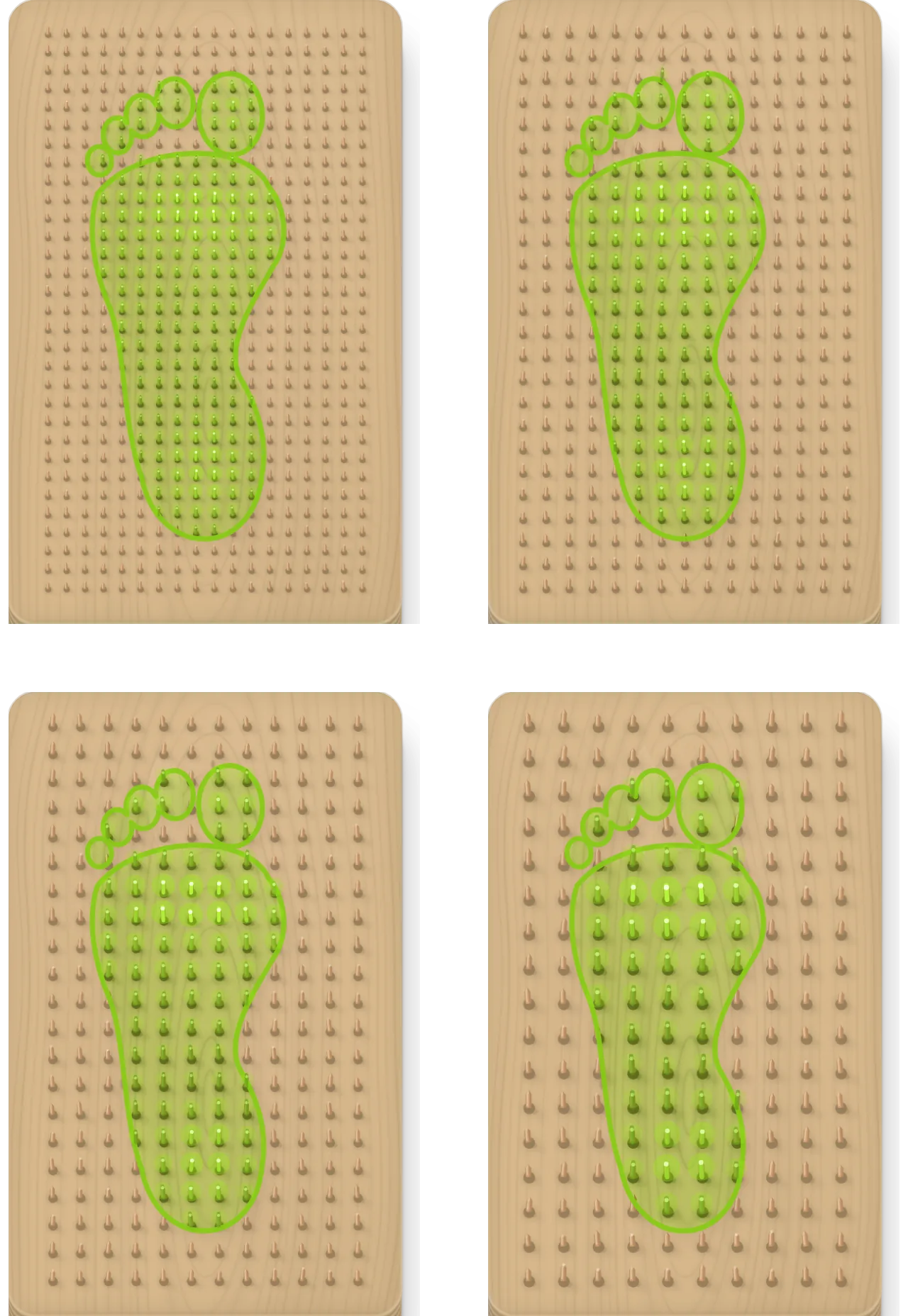
The wider the spacing, the fewer nails under your foot and the sharper it feels. So you stand a little less on a firm board and a little longer on a soft one. Sadharo adjusts its program goals to your board like this:
| Nail spacing | Factor | 10 minutes becomes |
|---|---|---|
| 6 mm | ×1.5 | 15 minutes |
| 8 mm | ×1.25 | 12.5 minutes |
| 10 mm | ×1 | 10 minutes |
| 12 mm | ×0.8 | 8 minutes |
| 15 mm | ×0.6 | 6 minutes |
A shorter time on a sharper board isn't a step back: each nail now carries more of your weight, and your feet need time to adjust. Which spacing suits you is covered in the sadhu board spacing guide.
How often to stand on nails
How often should you stand on nails? Once a day works well for most people, and it's how every Sadharo program is built. Consistency matters more than duration: a minute every day does more than ten forced minutes once a week.
A missed day doesn't reset your progress: just carry on. In the classic 40-day cycle, the last day of each week is gentler, practiced seated or on your palms. Rest is part of the path, not a skipped day.


Can you stand on nails every day?
Yes, if you have no contraindications and aren't forcing it. Many practitioners stand on nails every day, keeping each session to a time that feels calm. What tends to change over weeks of daily practice is in sadhu board before and after. If you have health concerns, check sadhu board side effects first.
Morning or evening: when to stand on nails
There's no strict rule, so pick by what you want from it:
- In the morning, it wakes you up and helps you focus for the day.
- In the evening, it helps you switch off after work and let go of tension.
Whenever you practice, avoid a full stomach: stand before a meal or a couple of hours after.
When to stand longer
Add time when, at your current time:
- your breathing stays even to the end;
- the sharpness fades rather than builds;
- you feel better after practice than before.
Once you've stood calmly on your board for 15 minutes or more, three times, you can try sharper spacing: from 8 to 10 mm, or from 10 to 12 mm. 15 mm is for people with years of daily practice.
When to stop early
The timer is a guide, not a demand. Step off right away, slowly and holding on, if you:
- feel very dizzy or your vision darkens;
- feel sick;
- get an unusual sharp pain or numbness;
- feel weak, as if you might faint;
- suddenly feel much worse.
Questions about practice time
Can you stand on a sadhu board before bed?
Yes, if it calms you down. Some people find it energizing instead. Try it for a few evenings and see how you sleep. If your sleep gets worse, move practice to the morning or afternoon.
How many times a day can you stand on nails?
Once a day is enough, and that's how Sadharo's programs are built. If two short sessions suit your day better, that's fine too; just keep each one within the time you already stand calmly.
What's the longest you should stand on nails?
There's no universal limit. Sadharo's longest program tops out at 20 minutes, and past that point depth matters more than time.
How long does it take for a sadhu board to work?
Many people feel calmer after their very first few minutes. Steadier changes, such as stepping on without fear or starting the day less tense, tend to come after two or three weeks of daily practice, which is why the beginner program lasts 21 days. A quick check-in before and after each session shows your own pace.
What if I've missed a few days?
Your progress doesn't reset, so just carry on. After a longer break, start a little below your last time and build up again: your feet may need a couple of days to get used to the sensation.
This article isn't medical advice. Sadharo isn't a medical device. Effects are described from practitioners' experience and published research, not as a promise of results.