 Sadharo
Board or mat
Nail board or acupressure mat: how they differ and which suits you
Sadhu board vs acupressure mat is a fair question: both press hundreds of points into your skin, and both promise calm. But one is a rigid board of metal nails you stand on for a few minutes, and the other is a soft pad of plastic spikes you lie on for much longer. Here's how they differ, what the research says about each, and which one suits what you're after.
- The Sadharo team
- Updated September 27, 2026
- 9 min read
In short
- Sadhu board: metal nails, usually pointed, on a rigid base. You stand on it (or lie on a special back board) for a few minutes. The sensation is strong, and the practice is about staying calm in discomfort.
- Acupressure mat: a soft pad covered in plastic spike “rosettes”. You usually lie on it for 10–40 minutes. It's much gentler.
- Research exists only for mats, and in a controlled study on stress the mat added nothing measurable to plain relaxation. There are no controlled studies on standing on nails.
- Choose a mat for long, gentle relaxation lying down; choose a board for a short, intense practice of focus and calm.
The difference between a sadhu board and an acupressure mat
The difference between a sadhu board and an acupressure mat comes down to the material under your skin, and everything else follows from it: posture, time and how intense it feels.
| What differs | Sadhu board | Acupressure mat |
|---|---|---|
| Material | metal nails (zinc-plated, copper and others) on a wooden base | plastic spikes grouped in rosettes on a soft pad |
| Posture | standing, seated with feet on the board; lying only on a back board | usually lying |
| Typical time | a few minutes, 1–20 at most | usually 10–40 minutes |
| Intensity | strong, especially the first seconds | gentle to moderate |
| Care | keep dry, store in a case, wipe the nails with an antiseptic | follow the maker's instructions; keep it clean and dry |
| Price | usually more expensive | usually cheaper |
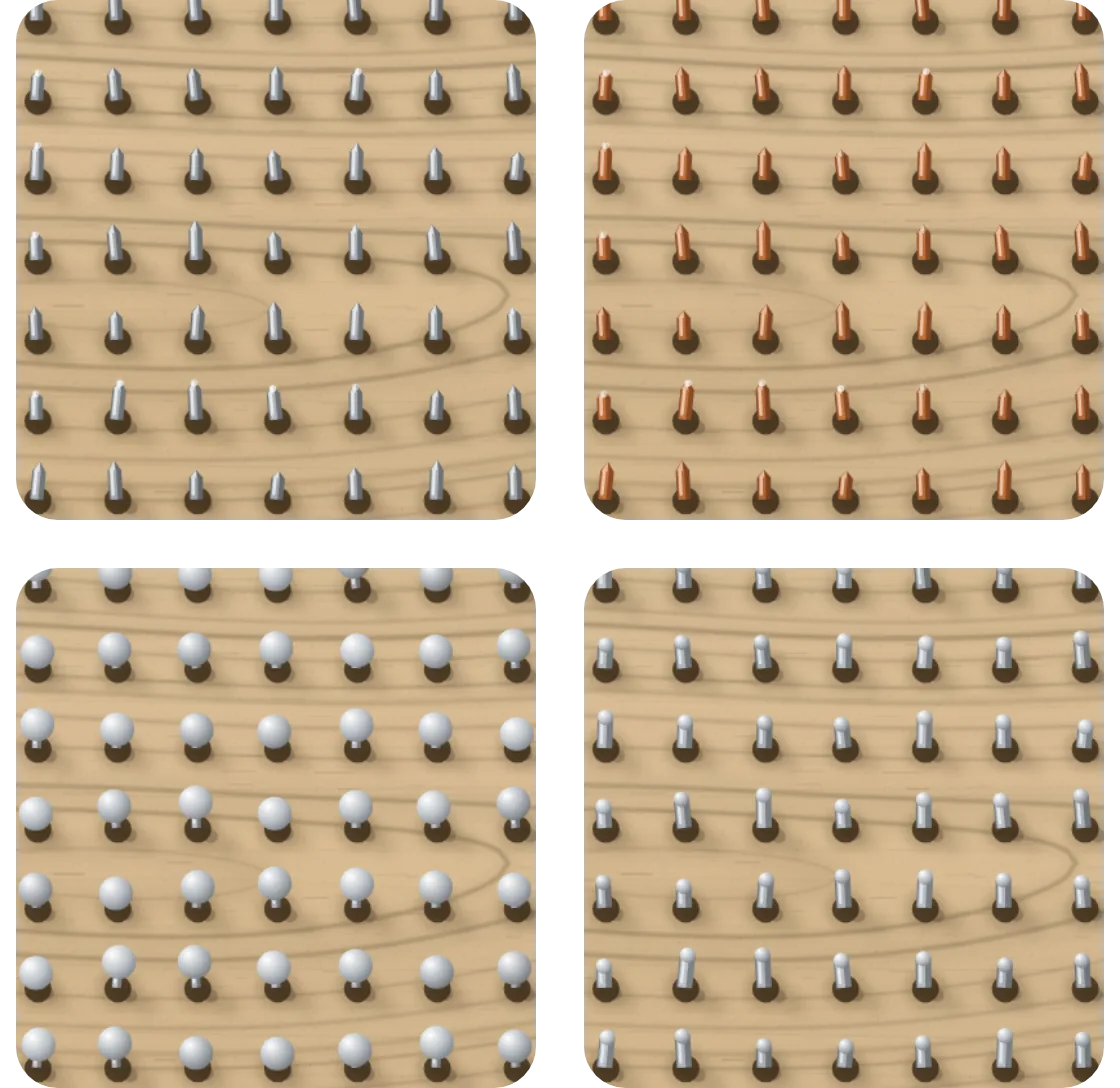
A sadhu board also changes a lot with its nail spacing: 8 mm feels soft for a board, 15 mm is deep. A mat's spikes are fixed, so what you adjust is time and how much of your body rests on it.
Is a sadhu board acupressure?
Sadhu board acupressure is a common way to describe it, and mats are sold as “acupressure” too. In practice, neither presses specific points the way a therapist's fingers would: both cover a whole area with hundreds of points at once. Claims that a board or a mat heals organs through points on your feet or back aren't backed by research.
What they do share is a strong, even sensation that pulls your attention into your body. That's the part you can actually feel, and it's where both tools seem to help: a few quiet minutes when your mind can't wander off.
What the research says about acupressure mats
Research on this topic exists only for mats. We couldn't find any published controlled studies on standing on a sadhu board.
- Stress, sleep and focus. In a 2023 study, healthy young students new to the practice did three weeks of relaxation training, some on an acupressure mat and some without one. In both groups perceived stress went down, while sleep quality and concentration endurance went up, with no significant difference between the groups. Blood pressure, heart rate, pain threshold and pain tolerance didn't change (Kisker & Schöne, 2023).
- Low back pain. In a randomized trial, 44 people with chronic low back pain did six months of therapeutic exercise, and half of them also lay on an acupressure mat for 60 minutes a day. Pain scores dropped significantly only in the mat group; disability and quality-of-life scores improved in both (Frizziero et al., 2021).
The honest reading: regular relaxation helps, with or without spikes, and a mat may add something for back pain when it's combined with exercise therapy. Neither study tested metal nails or standing, so there's no evidence that a board works better or worse than a mat. Neither one is a treatment.
Can you use an acupressure mat instead of a sadhu board?
You can use an acupressure mat instead of a sadhu board to get started: it's a gentle way to find out how your body reacts to spikes. But it's a different practice. A mat is for lying still and relaxing for half an hour. A board is a few intense minutes where the work is to stay calm while everything says “step off”. If that second part is what you want, a mat won't give you the same experience.
It works the other way too. A regular sadhu board isn't a mat replacement for your back: foot boards aren't made for lying on. For that you need a back board with a gap for your spine, covered in sadhu board for back.
Which is better: nail board or acupressure mat?
Neither nail board nor acupressure mat is better overall: they suit different goals.
An acupressure mat suits you if you:
- want to relax lying down, for example before sleep;
- prefer a gentle sensation and longer sessions;
- want to try spikes without a big step.
A sadhu board suits you if you:
- want a short daily practice, a few minutes rather than half an hour;
- are after the challenge: learning to stay calm in strong discomfort;
- want something that holds your attention by itself, like a meditation that does the focusing for you (more in sadhu board for anxiety).
Some people use both: a board for a few sharp minutes in the morning, a mat for winding down in the evening.
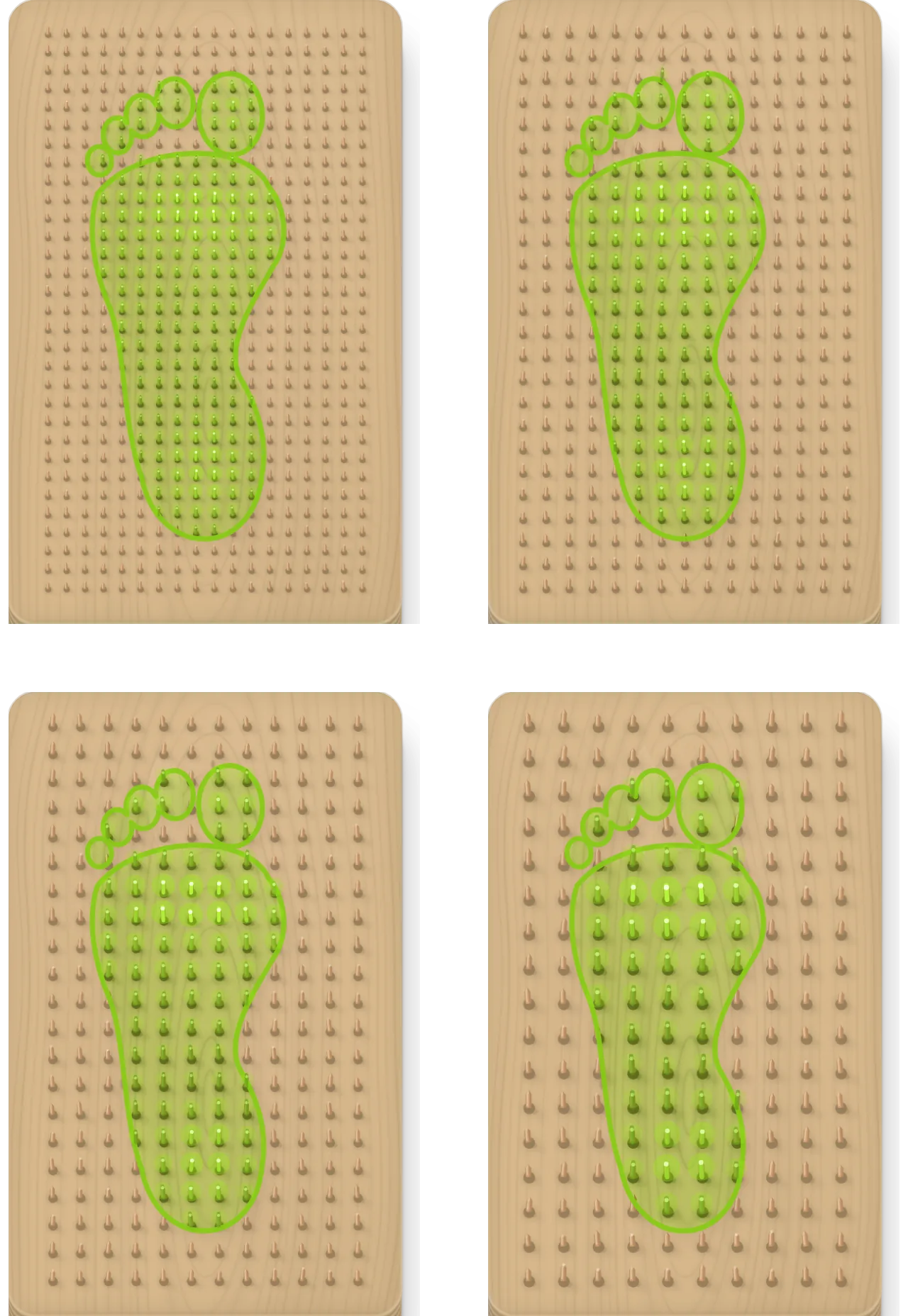
If you choose a board, start softer than you think: 8 or 10 mm. The full comparison of spacing, nail metals and sizes is in the sadhu board spacing guide.
How to try each one safely
- Check the warnings. Both press hard into your skin. For sadhu boards, makers list pregnancy, heart problems, blood pressure medication, wounds on the feet and a few more; the full list is in sadhu board side effects. For a mat, read its maker's warnings.
- Start short. A minute on a chair with your feet on the board, or a few minutes on a mat, is enough the first time. How to set up a first practice on nails is in how to use a sadhu board.
- Get up slowly. From a mat or a back board, sit up first and only then stand. Step off a sadhu board one foot at a time, never jump.
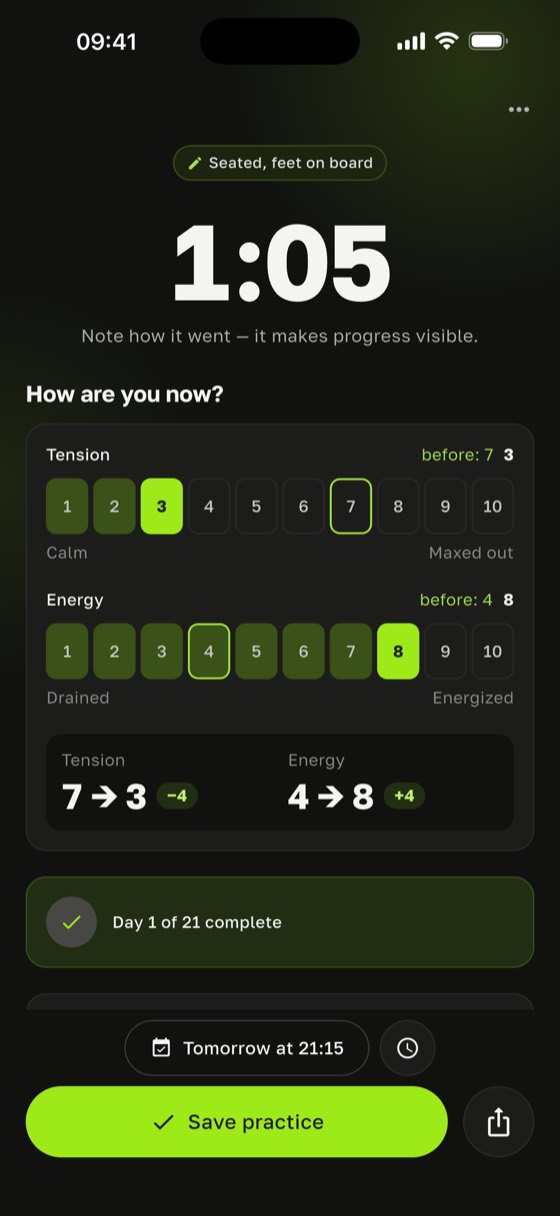
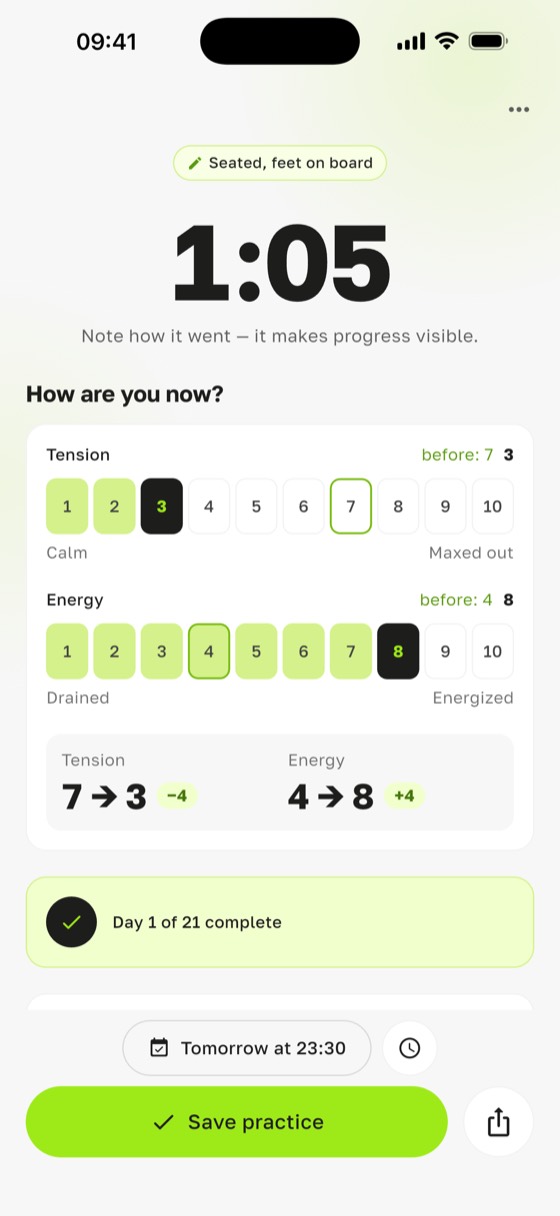
- Compare how you feel. Rate your tension and energy from 1 to 10 before and after each session. A couple of weeks of notes will tell you more than any comparison table.
Questions about boards and mats
Is a sadhu board better than an acupressure mat?
Not better, different. A board gives a short, intense practice; a mat gives a longer, gentler one. Research exists only for mats, and it shows that regular relaxation helps with or without spikes. More in sadhu board benefits.
Is a sadhu board more painful than an acupressure mat?
Yes, usually much more intense, especially in the first seconds: metal nails and your full weight on two soles. A softer spacing (8 or 10 mm) and starting seated close some of that gap.
Can I lie on a sadhu board like a mat?
Only on a back board, which has two halves and a gap for your spine. Don't lie on foot boards.
Do acupressure mats work?
For relaxation, they seem to help as much as any regular relaxation break does. In one study, stress went down and sleep improved just as much without the mat. For low back pain, one trial found an extra benefit when a mat was added to exercise therapy.
Sources
- Kisker J., Schöne B. Regular use of acupressure mats reduces perceived stress at subjective but not psychophysiological levels: Insights from a three-week relaxation training. Applied Psychology: Health and Well-Being, 2023. doi:10.1111/aphw.12490
- Frizziero A. et al. Efficacy of an Acupressure Mat in Association with Therapeutic Exercise in the Management of Chronic Low Back Pain: A Prospective Randomized Controlled Study. Applied Sciences, 2021, 11(11): 5211. doi:10.3390/app11115211
This article isn't medical advice. Sadharo isn't a medical device. Effects are described from practitioners' experience and published research, not as a promise of results.