 Sadharo
Stress and anxiety
Can standing on nails help with anxiety and stress?
A sadhu board for anxiety sounds like a contradiction: why would standing on nails calm you down? Yet that contrast is exactly what draws people to it. Here's how the practice can ease everyday stress and anxious thinking, what the research actually shows, a simple routine to try, and where its limits are.
- The Sadharo team
- Updated September 27, 2026
- 7 min read
In short
- What it can do: give you a few minutes when your mind can't run off, and a chance to practice breathing through discomfort instead of reacting to it.
- What research shows: in one study, regular relaxation lowered perceived stress and improved sleep and concentration; an acupressure mat added nothing on top.
- How to try it: a few minutes a day, a long exhale, and a quick before-and-after check-in.
- What it isn't: a treatment for an anxiety disorder or depression.
If anxiety or low mood affects your daily life, please talk to a doctor or mental health professional. A sadhu board can be a helpful daily ritual, but it doesn't replace treatment. If you're in crisis or thinking about harming yourself, contact your local emergency services or a crisis line in your country right away.
How standing on nails can ease stress
Everyday anxiety often shows up as loops of thought about what might go wrong. Standing on nails pulls your attention out of those loops and into your body. The sensation under your feet is so strong that it's hard to think about anything else, so for a few minutes the noise goes quiet without you having to force it.
The second part is the practice of staying. In the first seconds everything says “get off!” If you stay and breathe out slowly, the wave passes. Many practitioners describe it as a small, safe rehearsal: noticing the alarm, not obeying it straight away, and watching it fade.
What the research says
There are no published controlled studies on sadhu boards and anxiety specifically. The closest research is on spiked acupressure mats. In a 2023 study, healthy young students new to the practice did three weeks of relaxation training, some on an acupressure mat and some without one. In both groups perceived stress went down, while sleep quality and concentration endurance went up, with no significant difference between the groups; blood pressure, heart rate, pain threshold and pain tolerance didn't change (Kisker & Schöne, 2023).
What that suggests: the regular pause is what helps, not magic in the nails. A sadhu board's advantage is practical. It's hard to half-do, so the pause is less likely to turn into scrolling. More on the evidence is in sadhu board benefits.
A meditation for people who can't meditate
Many people with anxious minds find sitting meditation frustrating: the instruction to “observe your thoughts” just gives the thoughts more room. Nail board meditation works the other way round. You don't have to empty your mind. You have one clear thing to attend to: the sensation and your breath. That's why some people call standing on nails a meditation that does the focusing for you.
Some add a nail board to their yoga practice, standing on it for a few minutes before or after. Others use it on its own.
A simple routine for stressful days
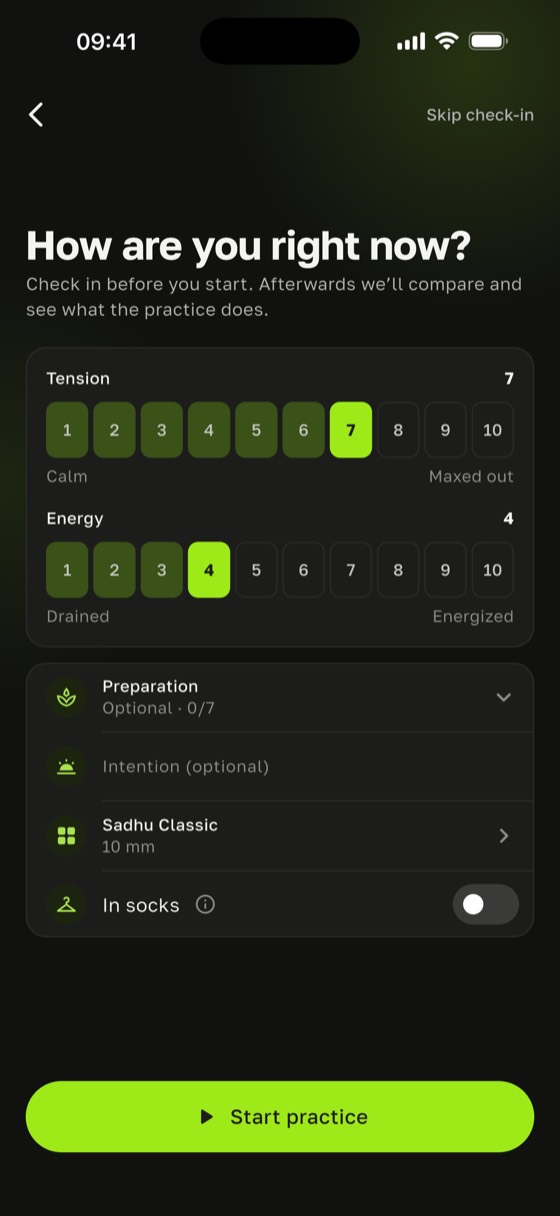
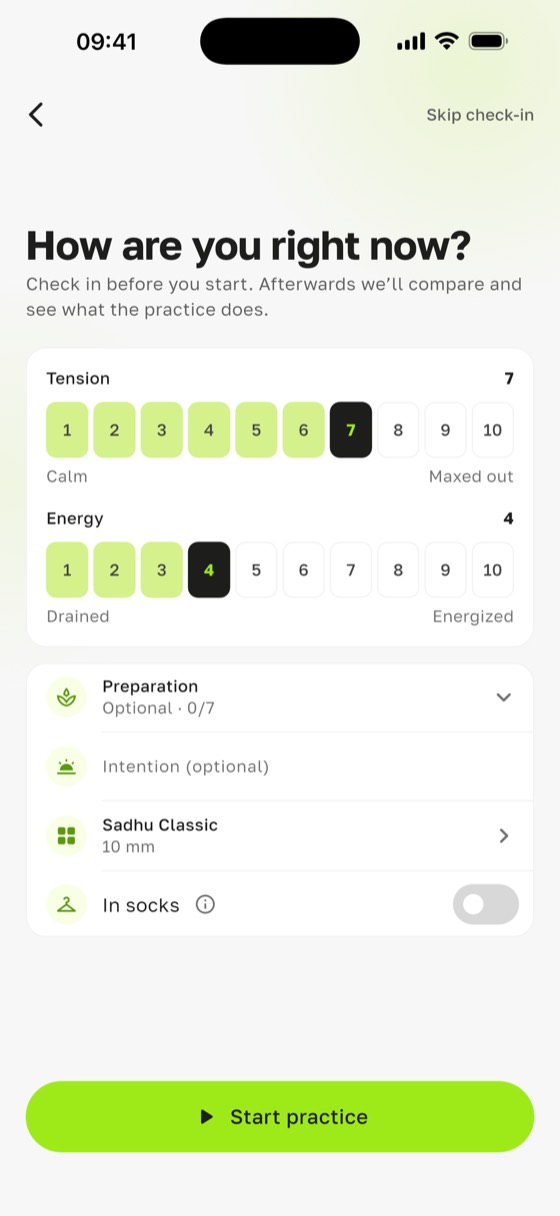
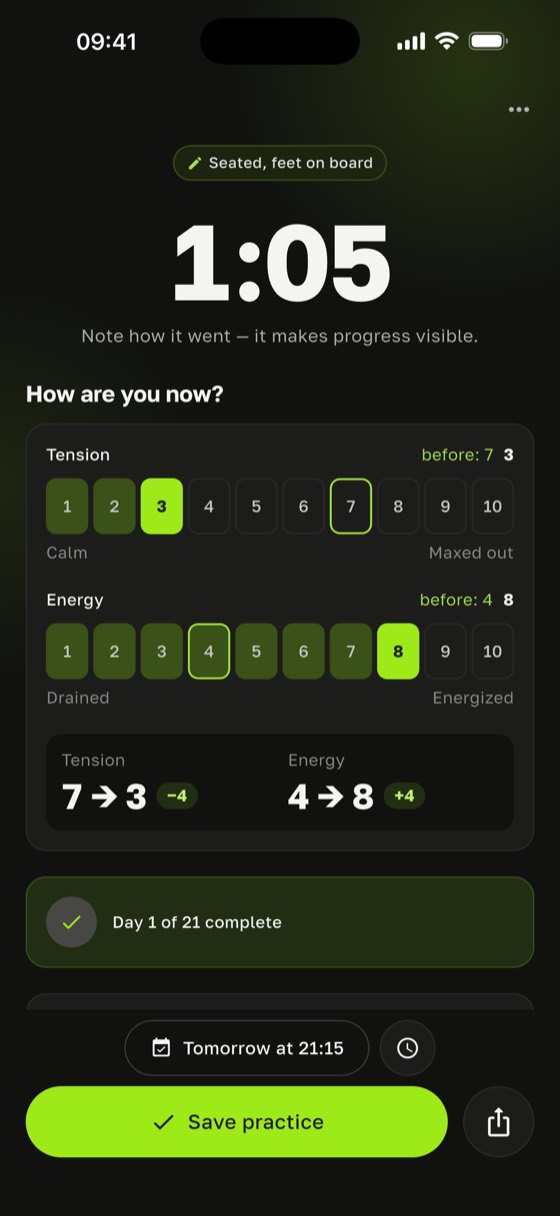
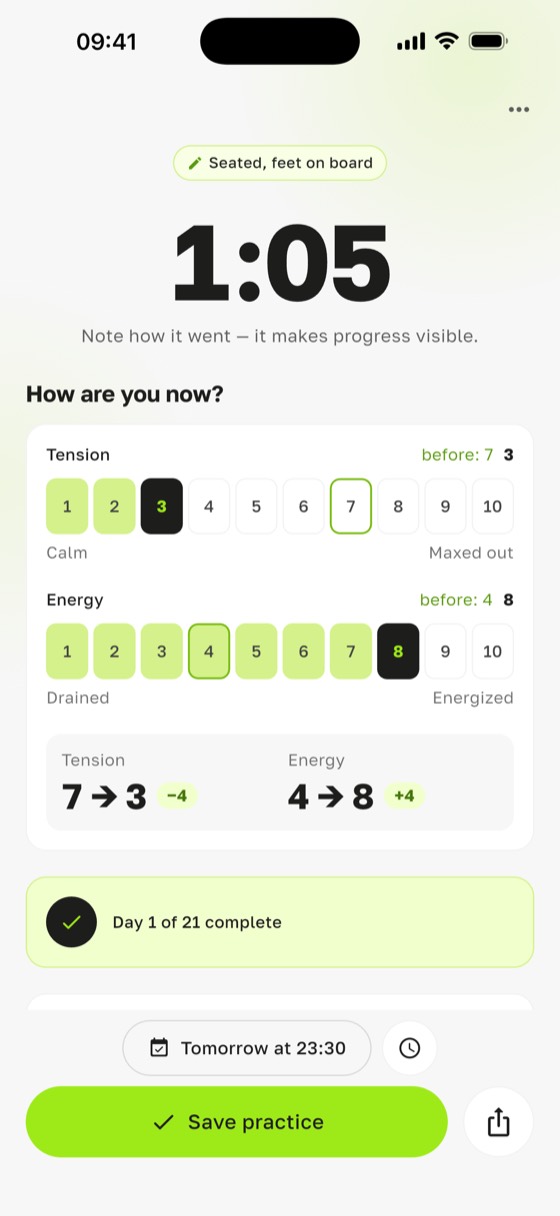
- Check in. Rate your tension and energy from 1 to 10.
- Step on slowly. One foot at a time, holding on to a wall or chair. If you're new, sit on a chair with your feet on the board instead.
- Breathe with a long exhale. In for 4 counts, out for 6. When your attention slips into worry or into your feet, bring it back to the exhale.
- Stay a little while. One to five minutes is plenty, depending on your experience.
- Step off and check in again. Note what changed.
After two weeks you'll have your own numbers showing whether it helps you. Step-by-step technique is in how to use a sadhu board.
When it's too much
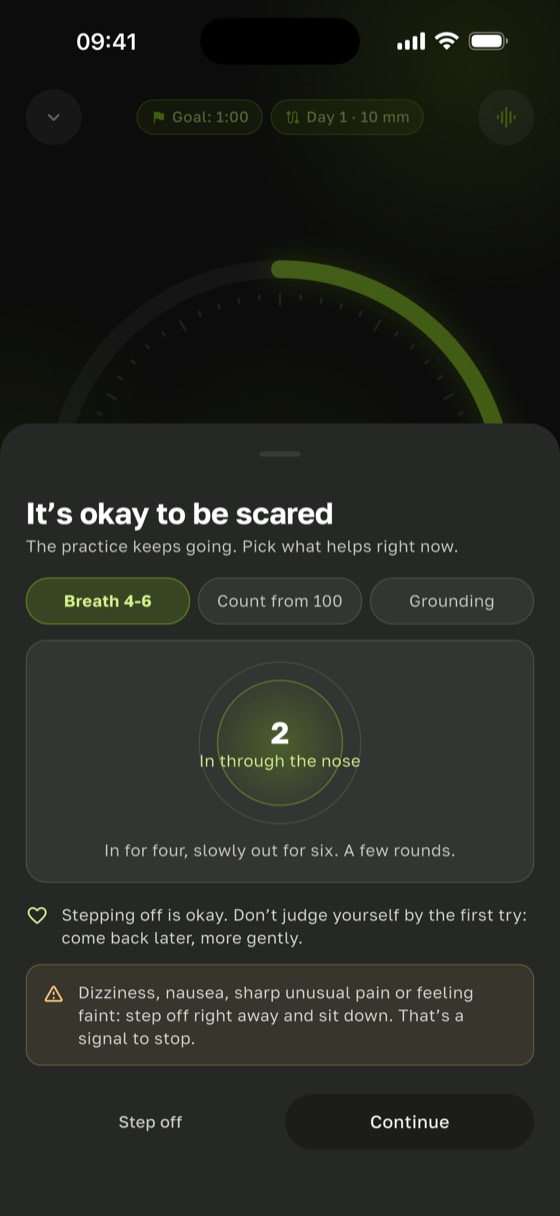
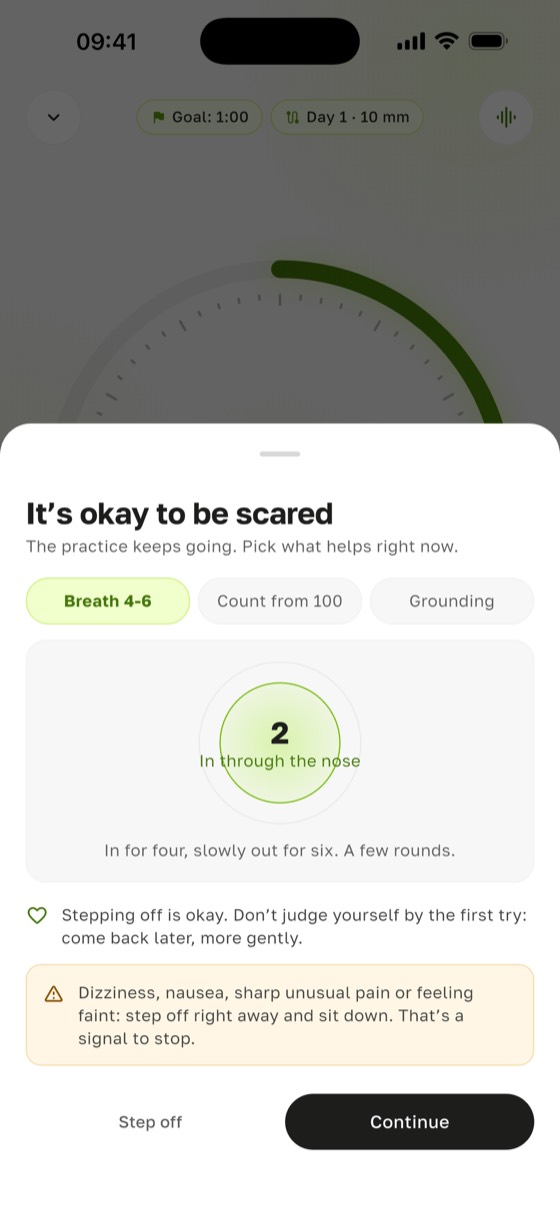
For some people, the intensity of the first seconds can itself set off a wave of panic. That's a sign to make it gentler, not to push harder:
- practice seated, with your feet on the board;
- use softer spacing (8 mm) or thin socks;
- keep sessions very short;
- use a counting or breathing aid.
Sadharo's timer has a “Scared?” button for exactly this: 5-5-5 breathing (in through the nose for 5, a calm hold for 5, out through the mouth for 5), a countdown from 100, a grounding exercise and clear signs it's time to step off. What's normal in the first minutes is covered in does standing on nails hurt.
Who should skip it
The usual contraindications apply: pregnancy, heart problems, blood pressure medication, wounds on your feet and a few others. If you take medication for anxiety or depression, check with your doctor too, especially if it affects your blood pressure or makes you dizzy. The full list is in sadhu board side effects.
Sadhu boards and anxiety on Reddit: stories, not studies
If you look up standing on nails for anxiety on Reddit or other forums, keep in mind what you're reading: personal stories, not data. Experiences vary from person to person, and what helped one poster may do little for you. That's why measuring your own before-and-after beats reading anyone's reviews, including ours.
Questions about sadhu boards and anxiety
Does standing on nails help with anxiety?
It can help with everyday stress: many people feel calmer after a few minutes on the board. But it isn't a treatment for an anxiety disorder and doesn't cure anxiety. If anxiety affects your life, talk to a professional.
Can a sadhu board help with depression?
It isn't a treatment for depression. Some people keep it as a daily ritual alongside professional care. If low mood doesn't lift or gets in the way of daily life, talk to a doctor or mental health professional.
How long should I stand on a sadhu board for stress?
A few minutes is enough. Beginners start with one minute seated; experienced practitioners stand 10–20 minutes. Regular short sessions matter more than long ones.
Is it better to use a sadhu board in the morning or evening for anxiety?
Many people like the evening to wind down after work, others the morning to start the day steadier. Try both for a few days and compare your check-ins.
This article isn't medical advice. Sadharo isn't a medical device. Effects are described from practitioners' experience and published research, not as a promise of results.